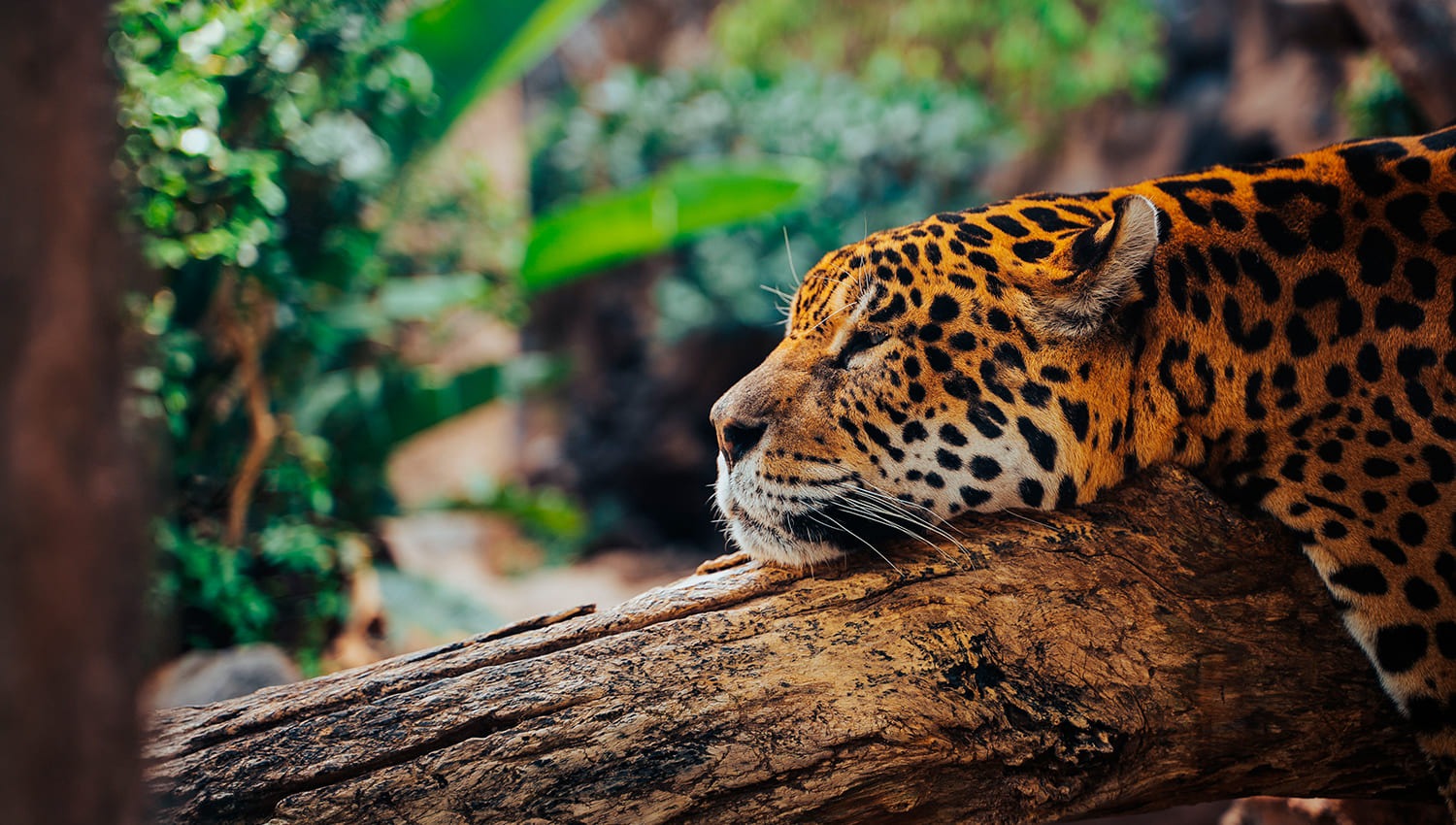
Beyond its beaches, mountains, and spectacular sunsets, Puerto Vallarta and Riviera Nayarit shelter one of the most fascinating natural heritages of the Mexican Pacific: their extraordinary avian diversity. Thanks to the convergence of the Sierra Madre Occidental, tropical forests, mangroves, estuaries, and islands, this region offers ideal conditions for observing resident and migratory species practically year-round. Whether on a jungle hike, a boat tour, or a dedicated birdwatching excursion, discovering these colorful protagonists adds a different dimension to any visit. Here are five species that stand out for their beauty, uniqueness, and importance within local ecosystems.
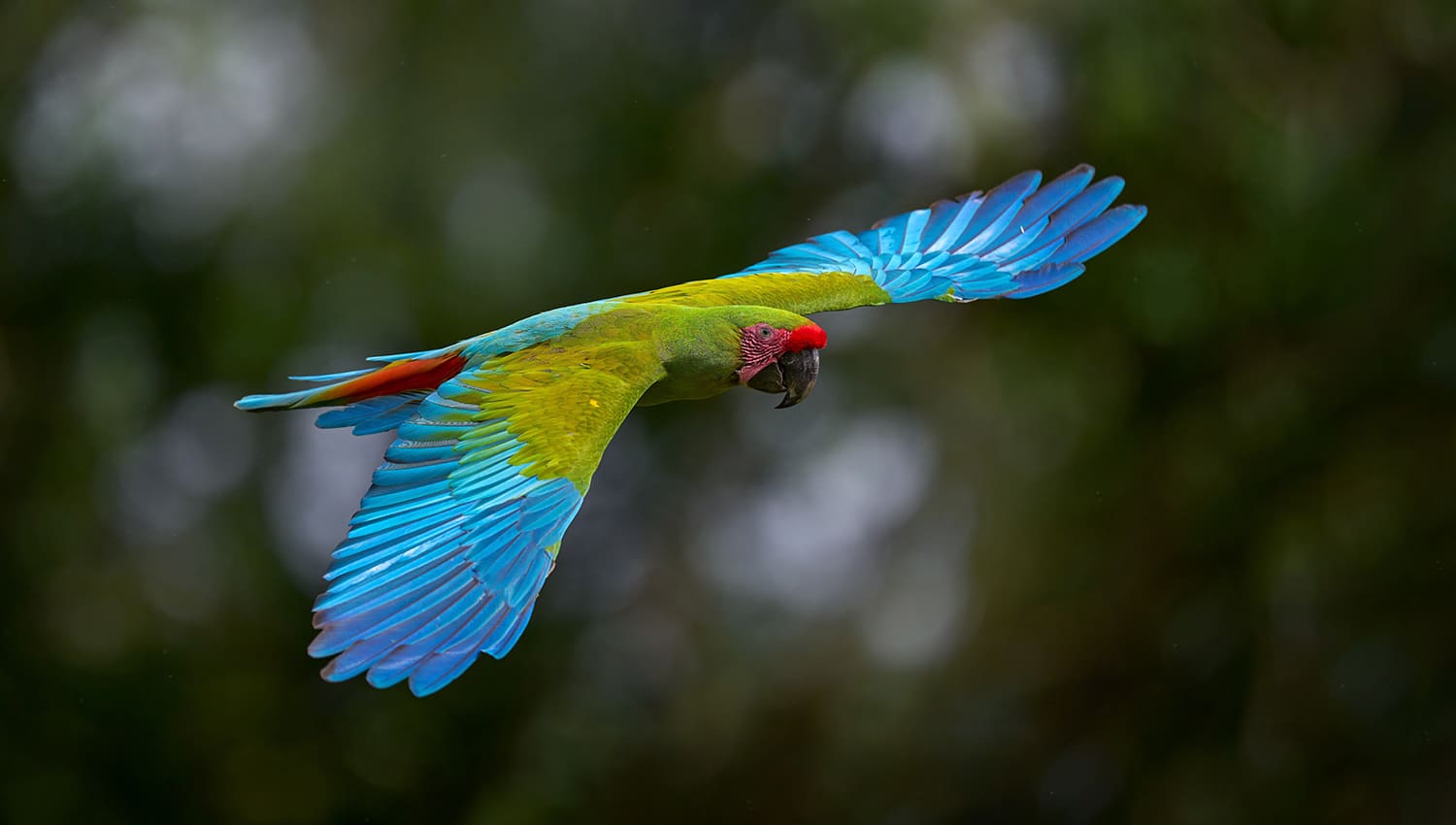
MILITARY MACAW (ARA MILITARIS)
With its unmistakable emerald green plumage, turquoise blue accents on the wings, and a striking reddish forehead, the military macaw is one of the most spectacular birds inhabiting the region. Although its distribution in Mexico has diminished over time, it can still be observed in the forested areas of the Sierra Madre Occidental; in this region, the El Tuito area forms part of its habitat. It is best spotted during the early morning hours.
This resident species plays a fundamental role in forest regeneration by dispersing the seeds of numerous plants. Its powerful flight, loud vocalizations, and social behavior make every sighting a memorable experience for photographers and nature lovers alike.
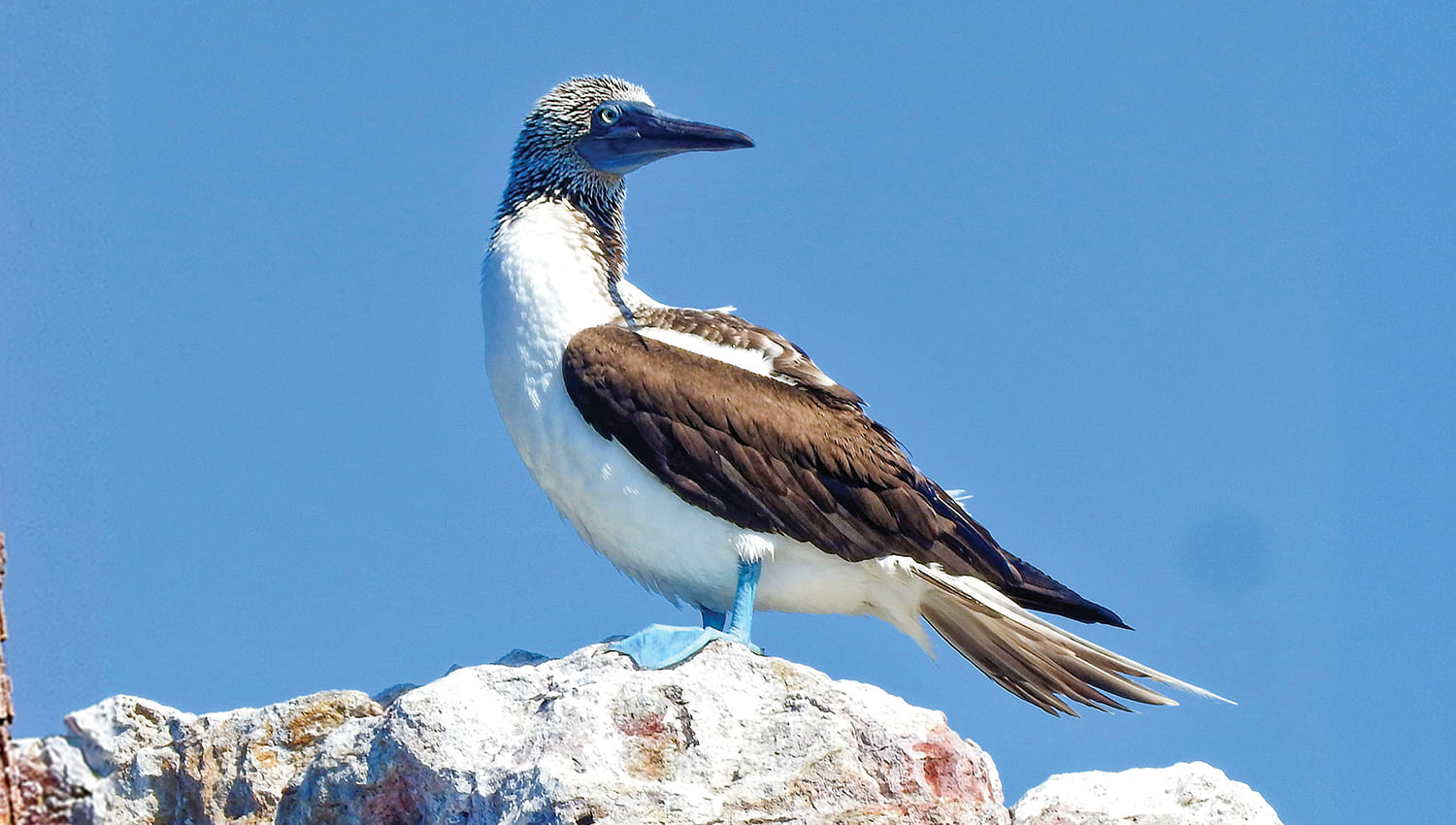
BLUE-FOOTED BOOBY (SULA NEBOUXII)
Famous for its bright turquoise-blue feet, the blue-footed booby is one of the most charismatic marine species of the eastern Pacific. While it is often associated with the Galápagos Islands, it can also be observed at both the Marietas Islands and Los Arcos de Mismaloya, where it maintains a small breeding population.
Its distinctive mating ritual, during which it alternately lifts its feet to attract a mate, is one of the most curious behaviors in the animal kingdom. Furthermore, its extraordinary ability to plunge-dive from several yards high to capture fish demonstrates the impressive adaptation of this species to the marine environment.
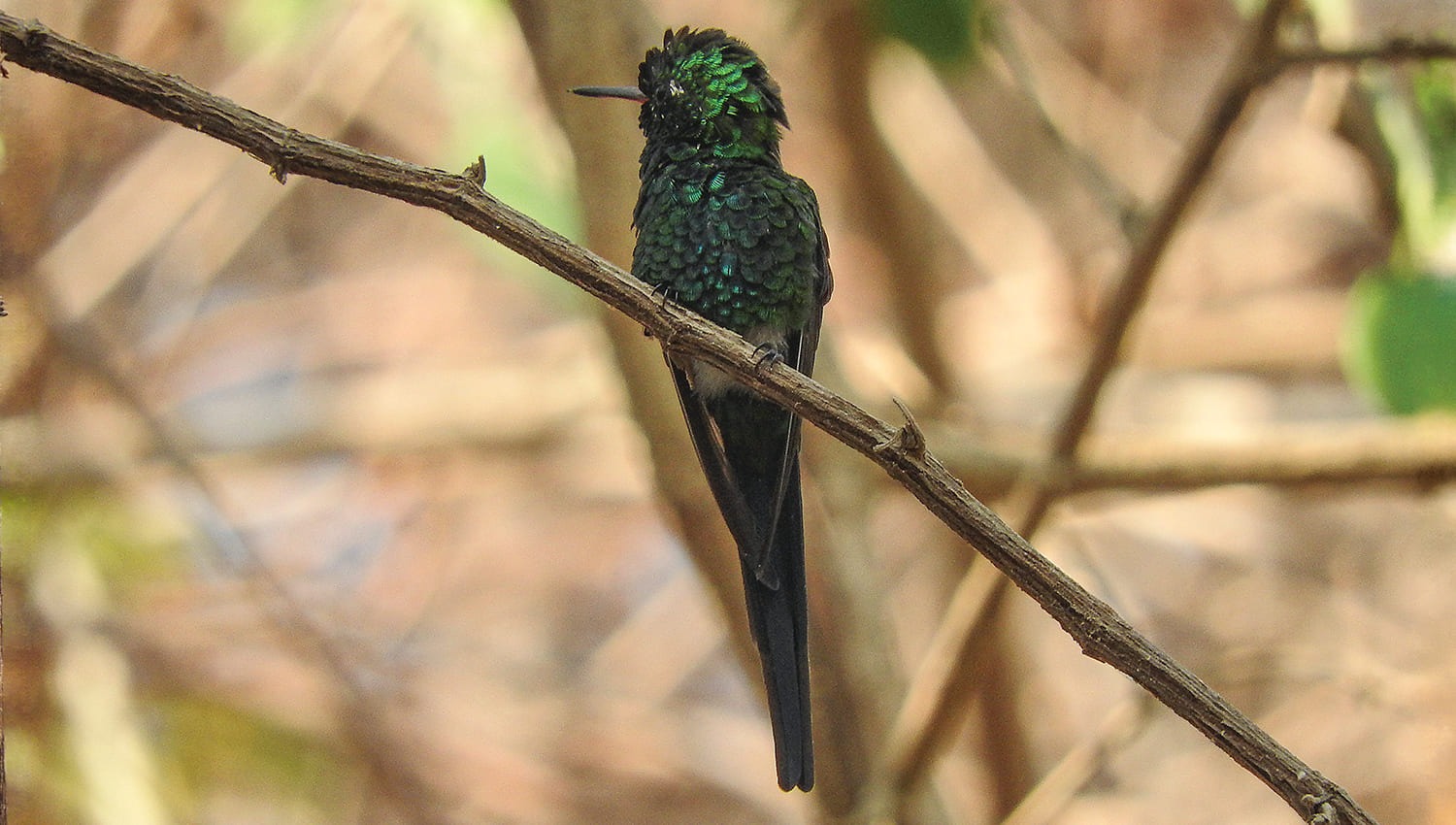
WESTERN EMERALD HUMMINGBIRD (RICCORDIA BERMUDIANUS)
Small, swift, and brilliant, the western emerald hummingbird captivates with the intense, metallic green reflections of its plumage. This resident species is frequently observed at the Vallarta Botanical Garden, as well as in the low jungles and wooded areas of the region, where it constantly visits flowers in search of nectar.
Like all hummingbirds, it performs an essential function as a pollinator for numerous plant species. Its ability to hover in mid-air and even fly backward, thanks to the incredibly rapid movement of its wings, makes it one of the most amazing birds to observe.
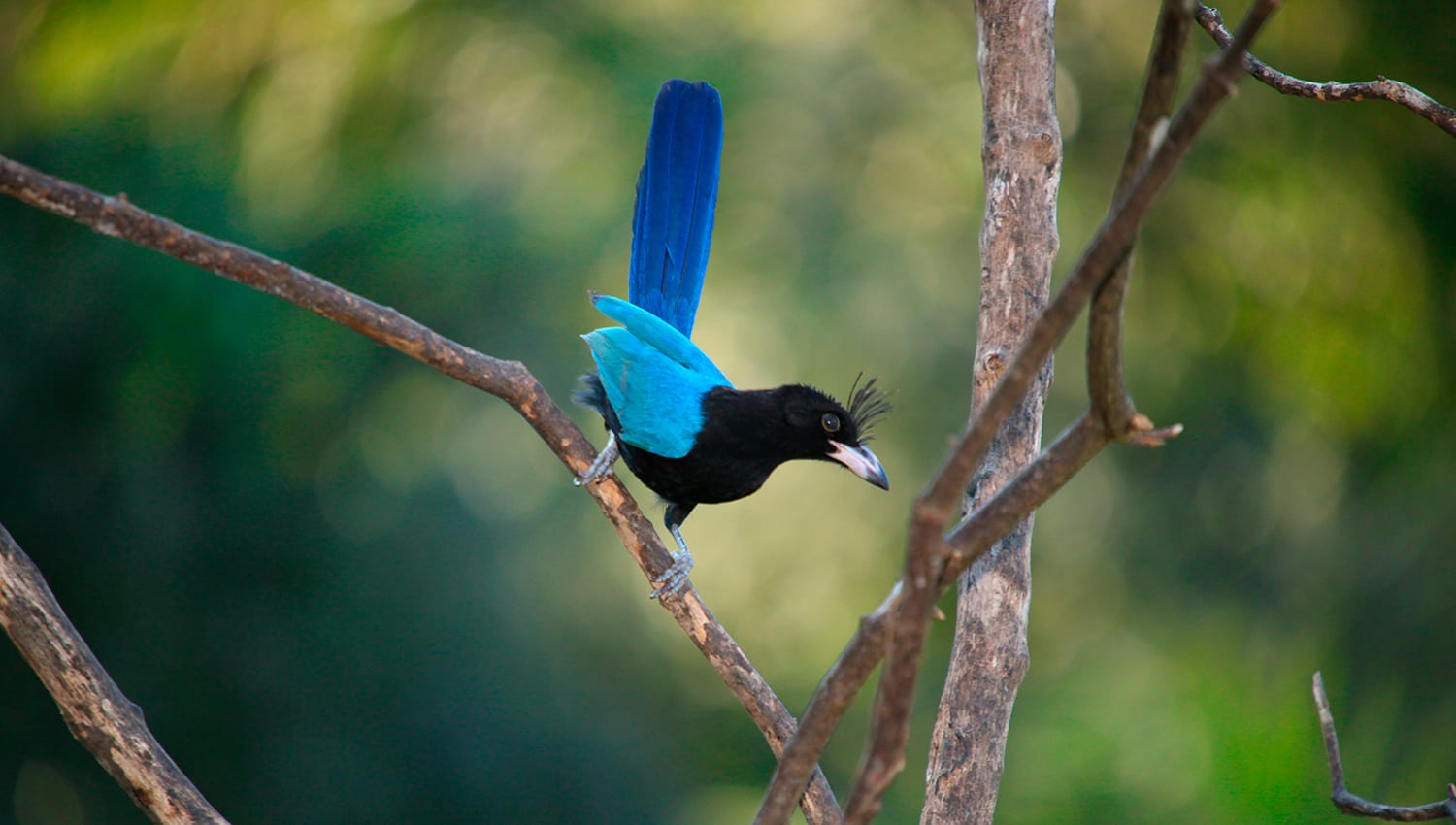
SAN BLAS JAY (CYANOCORAX SANBLASIANUS)
Endemic to the Mexican Pacific coast, the San Blas jay is easily recognizable by the combination of its deep blue plumage, white throat, and a distinctive black band around its head. It inhabits tropical forests and wooded areas from southern Nayarit to western Mexico.
This is a highly social and intelligent bird that usually moves in small family groups. Its varied calls and curious behavior make it relatively easy to detect during walks along nature trails, making it a favorite among birdwatchers.
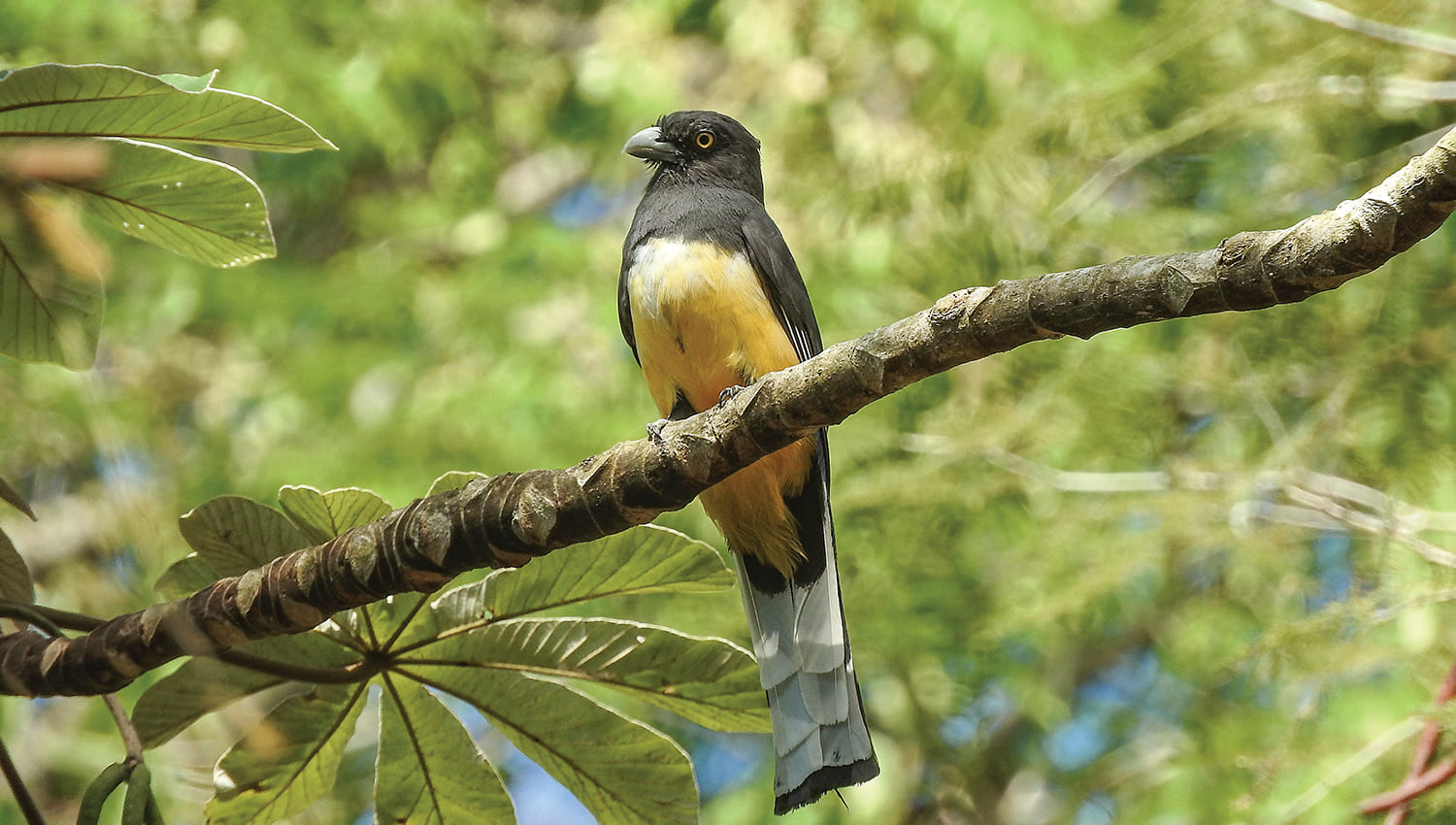
CITREOLINE TROGON (TROGON CITREOLUS)
The citreoline trogon is one of the lesser-known gems of western Mexico’s tropical forests. Its elegant combination of green tones on its back, a bluish head, and a bright yellow breast allows it to stand out among the foliage when light filters through the vegetation.
Endemic to Mexico, this resident species is frequently spotted in the Sayulita and San Pancho areas, where it remains motionless for long periods until it darts out to capture insects or small fruits. Its discreet behavior makes every encounter especially rewarding for those who explore the natural areas of Riviera Nayarit with patience and attention.
The ornithological wealth of Puerto Vallarta and Riviera Nayarit reflects part of the extraordinary biodiversity that characterizes this destination. For those who enjoy contact with nature, birdwatching represents an opportunity to discover a different side of the region and appreciate the close connection among its ecosystems, where every journey can become an unforgettable experience.