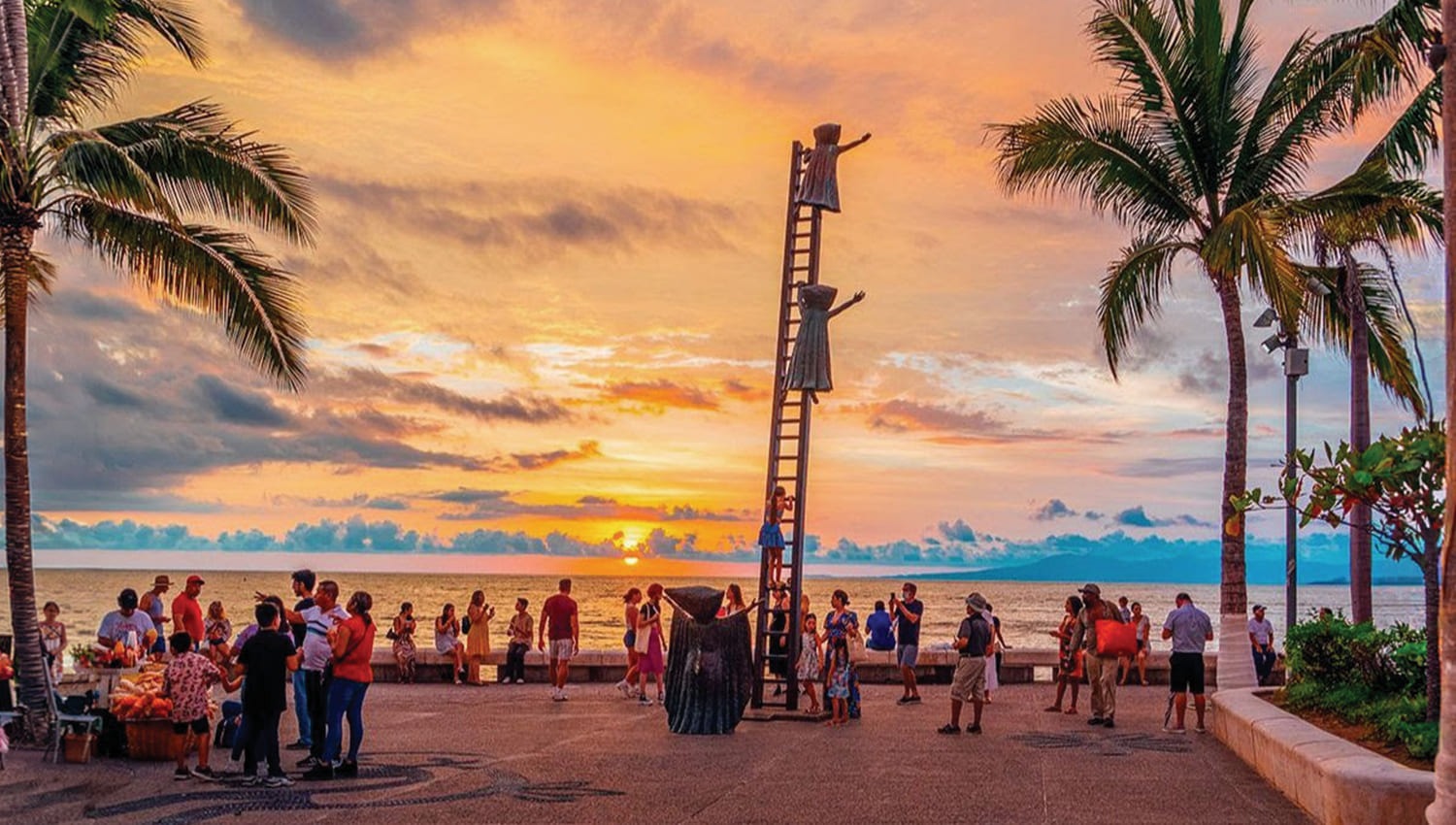
The Puerto Vallarta Malecón is an open-air art gallery where every sculpture tells a story and offers a perfect backdrop to capture some of the destination’s most memorable moments.
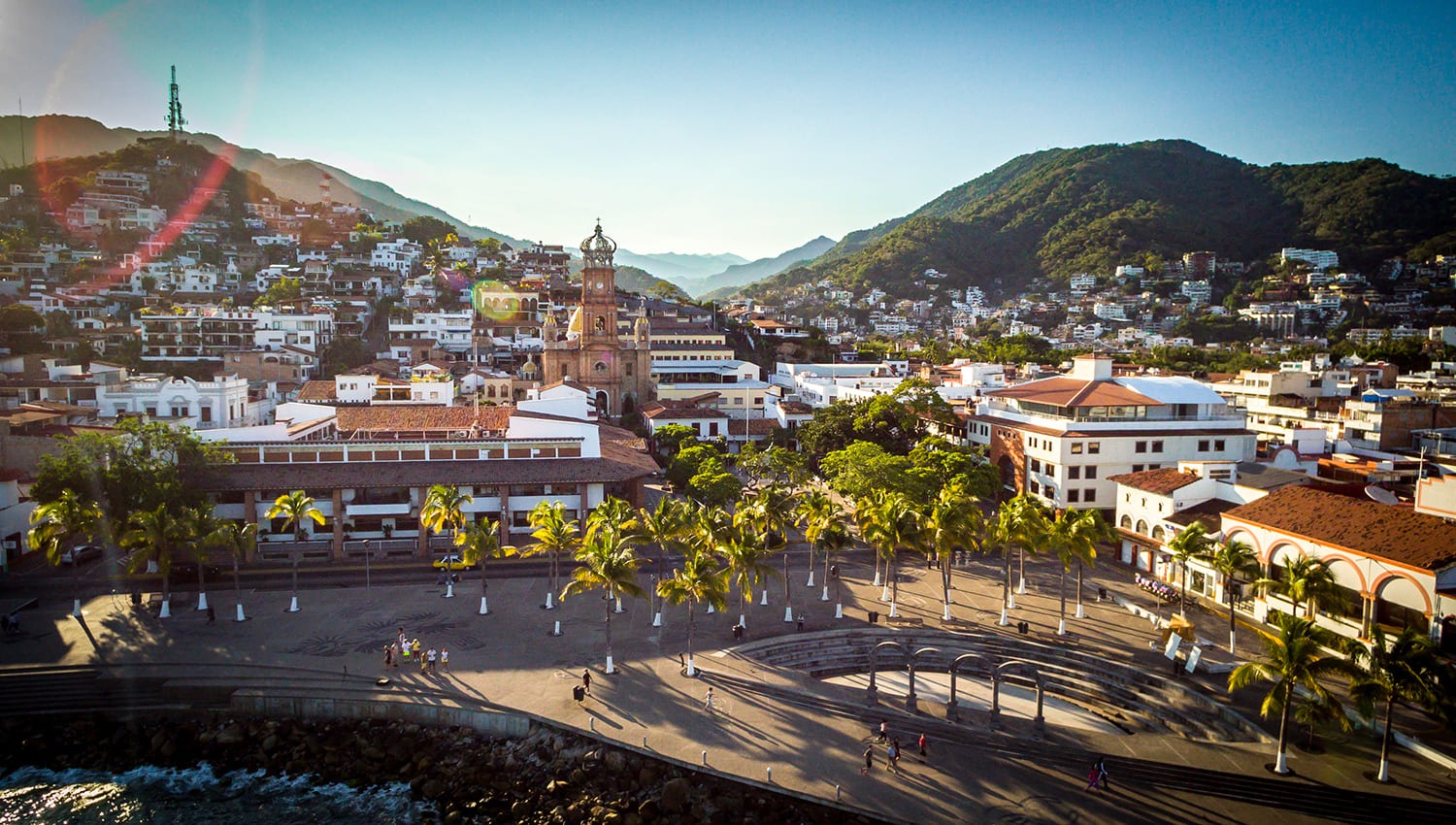
Along this iconic boardwalk, works by Mexican and international artists coexist, enriching the urban landscape while becoming true symbols of the city. From figures inspired by mythology to monuments evoking love, hope, and good fortune, these pieces form part of Puerto Vallarta’s character. If you are planning to explore the Malecón with a camera or phone in hand, here are six of the most photogenic spots that cannot be missed on your tour.
THE SEAHORSE:
PUERTO VALLARTA’S GREAT ICON
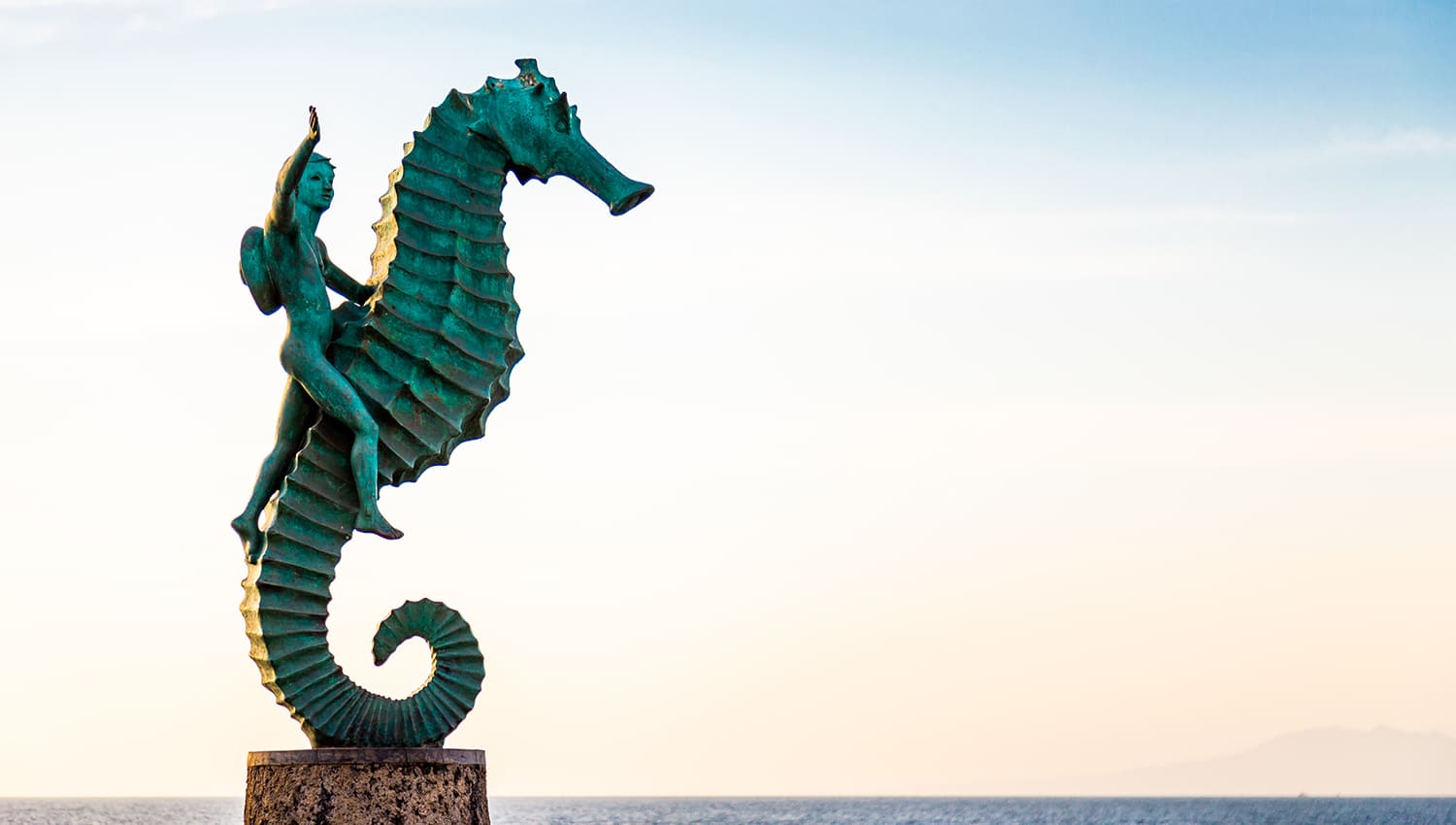
Few images represent Puerto Vallarta better than El Niño sobre el Caballo de Mar (The Boy on the Seahorse), known simply as El Caballito (The Seahorse). Created by Jalisco artist Rafael Zamarripa, this bronze sculpture is considered the city’s quintessential symbol. Although many believe it has always stood on the Malecón, the original work was installed in the late 1960s at Las Pilitas, at the southern end of Los Muertos Beach. After being swept away by a storm, Zamarripa created a larger replica that was placed on the Malecón in 1976, becoming the boardwalk’s first sculpture. Its composition represents hope, hospitality, and pride in Jalisco.
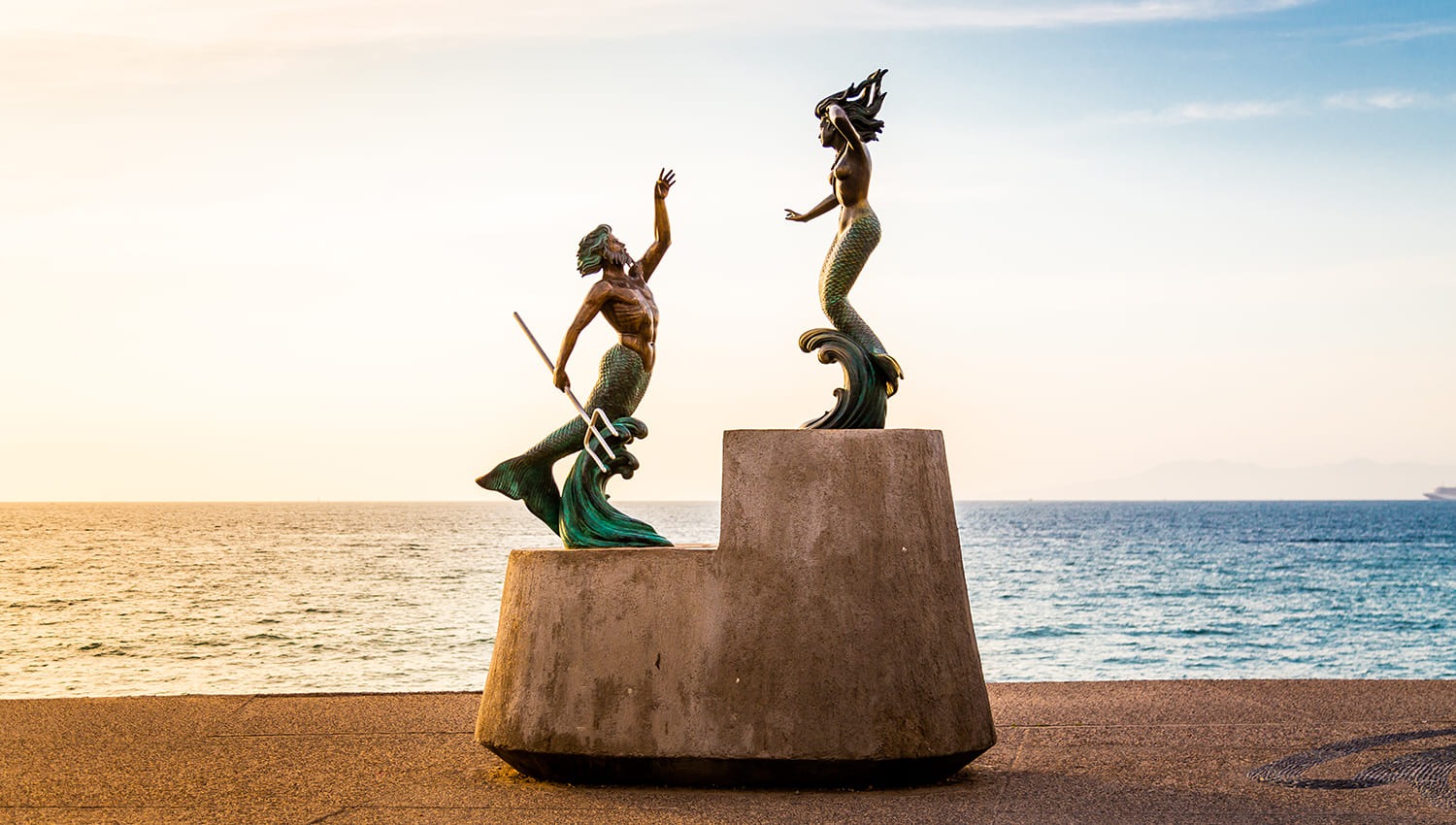
TRITON AND MERMAID:
A MYTHOLOGY-INSPIRED ENCOUNTER
Although for many years it was known as Neptuno y Nereida (Neptune and Nereid), the title conceived by its author is Tritón y Sirena (Triton and Mermaid), as the figures represent the son of Poseidon and a mermaid from Greek mythology. Unveiled in 1990, the sculpture by Carlos Espino stands out for the anatomy of its figures and the dynamism of its composition—qualities that make it a favorite for sunset photographs. A curious fact is that a very similar version exists on the boardwalk of Barra de Navidad; however, that piece’s Triton does not hold the characteristic trident that distinguishes the Vallarta artwork.
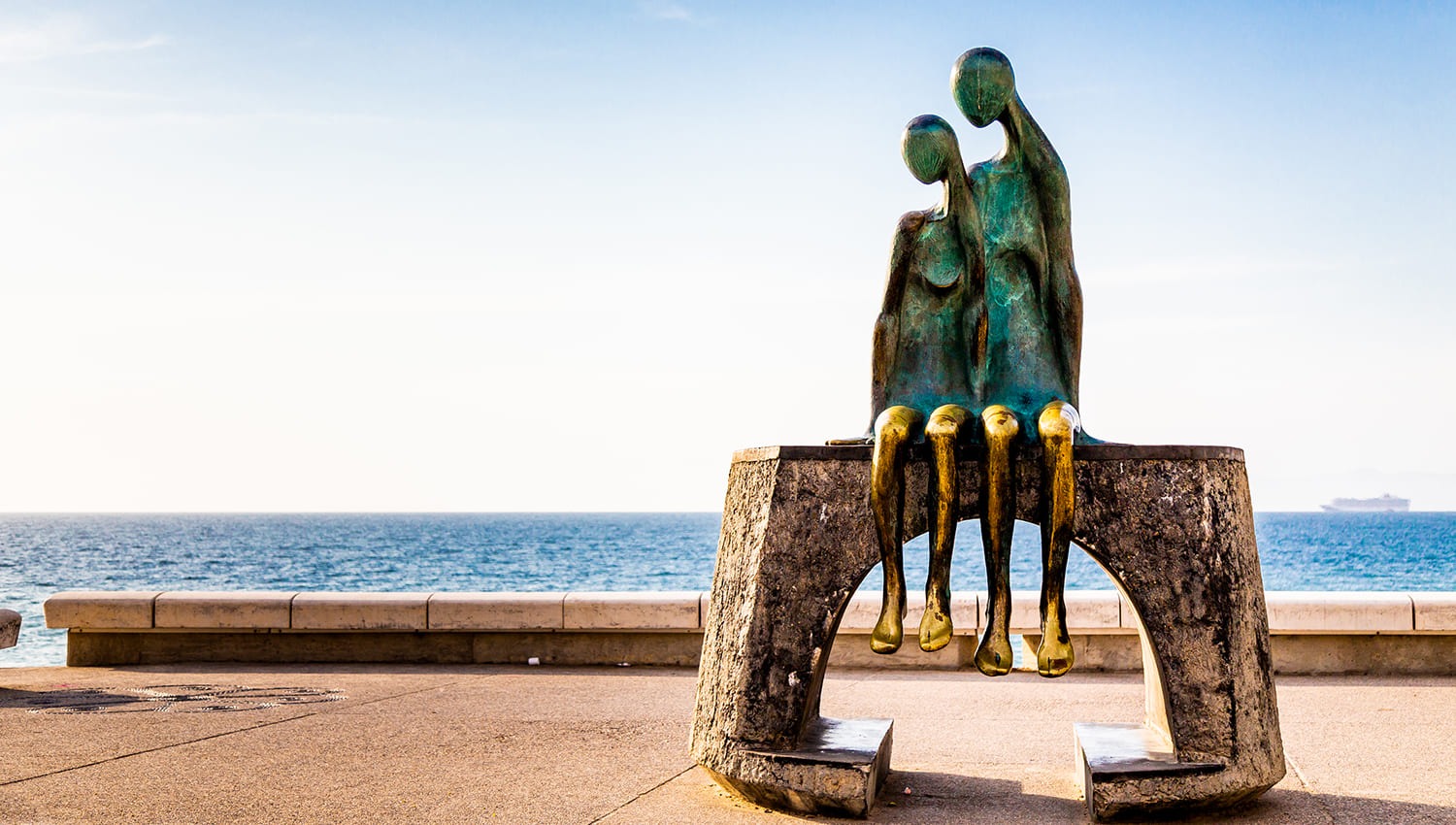
NOSTALGIA:
A LOVE STORY CAST IN BRONZE
Sculptures can also tell deeply personal stories, and Nostalgia is perhaps the finest example. Created by renowned artist Ramiz Barquet and unveiled in 1984, this was the second work installed along the Malecón. The piece was born from the sculptor’s reunion with Nelly Galván, his childhood sweetheart, whom he married years later. More than a literal representation, the work symbolizes the permanence of love despite time and distance. Its elegant silhouette, framed by the Pacific Ocean, makes it one of the most romantic and photographed spots along the coastal walk.
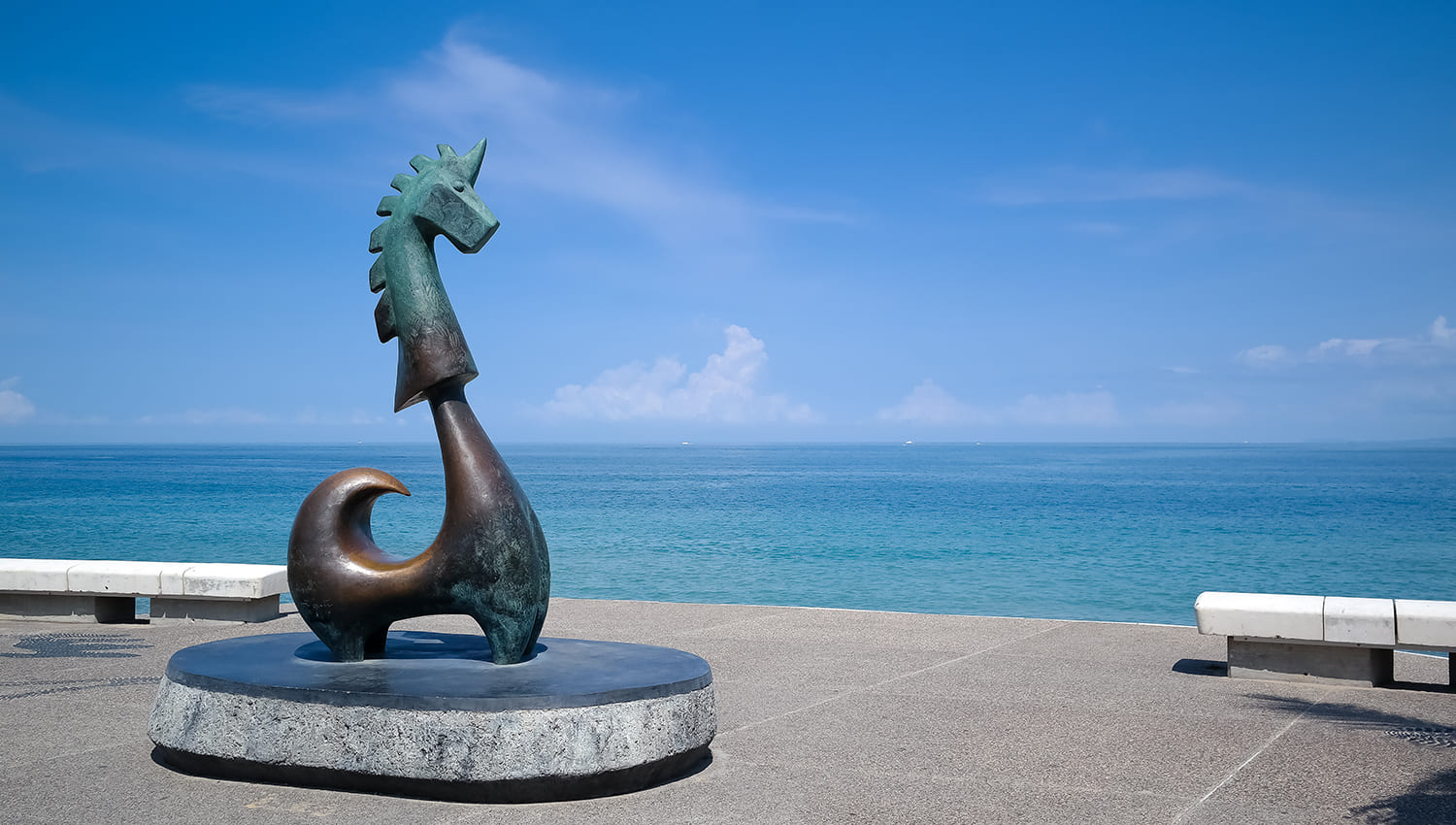
THE UNICORN OF GOOD FORTUNE:
A STOP TO ATTRACT LUCK
Added to the Malecón in 2011, El Unicornio de la Buena Fortuna (The Unicorn of Good Fortune), by sculptor Aníbal Riebeling, is one of the more recent additions to this urban collection. Crafted in bronze, it depicts a winged unicorn that seems to rise weightlessly over a sphere. Popular tradition says that touching the sculpture brings good fortune, which is why visitors from all over often stop to pose beside it. Its popularity grew so much that it was necessary to slightly elevate its base to prevent people from climbing onto the artwork during photo sessions.
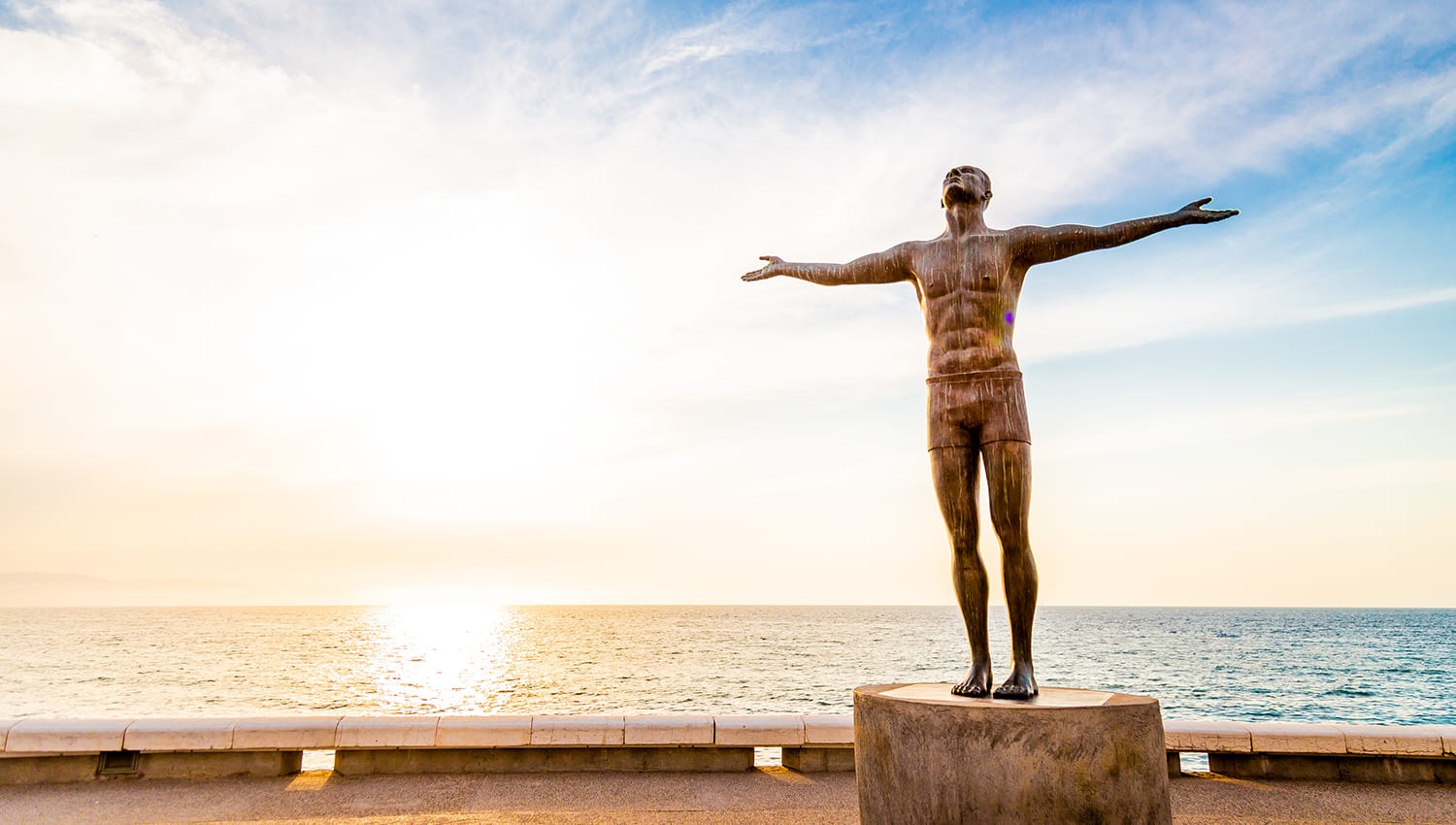
RAIN:
MOVEMENT MADE INTO SCULPTURE
Among the most contemporary pieces on the Malecón stands Lluvia (Rain), a work by Mexican artist Jovian. Crafted using an abstract sculptural language, its design plays with balance, vertical forms, and a sense of movement, evoking raindrops descending toward the sea. This sculpture was the 34th piece incorporated into the Malecón and was donated by the artist himself, through Galería Corsica, to the municipality of Puerto Vallarta in December 2020. Its minimalist aesthetic contrasts with the surrounding tropical landscape, making it a favorite setting for those seeking photos with a more artistic and modern style.
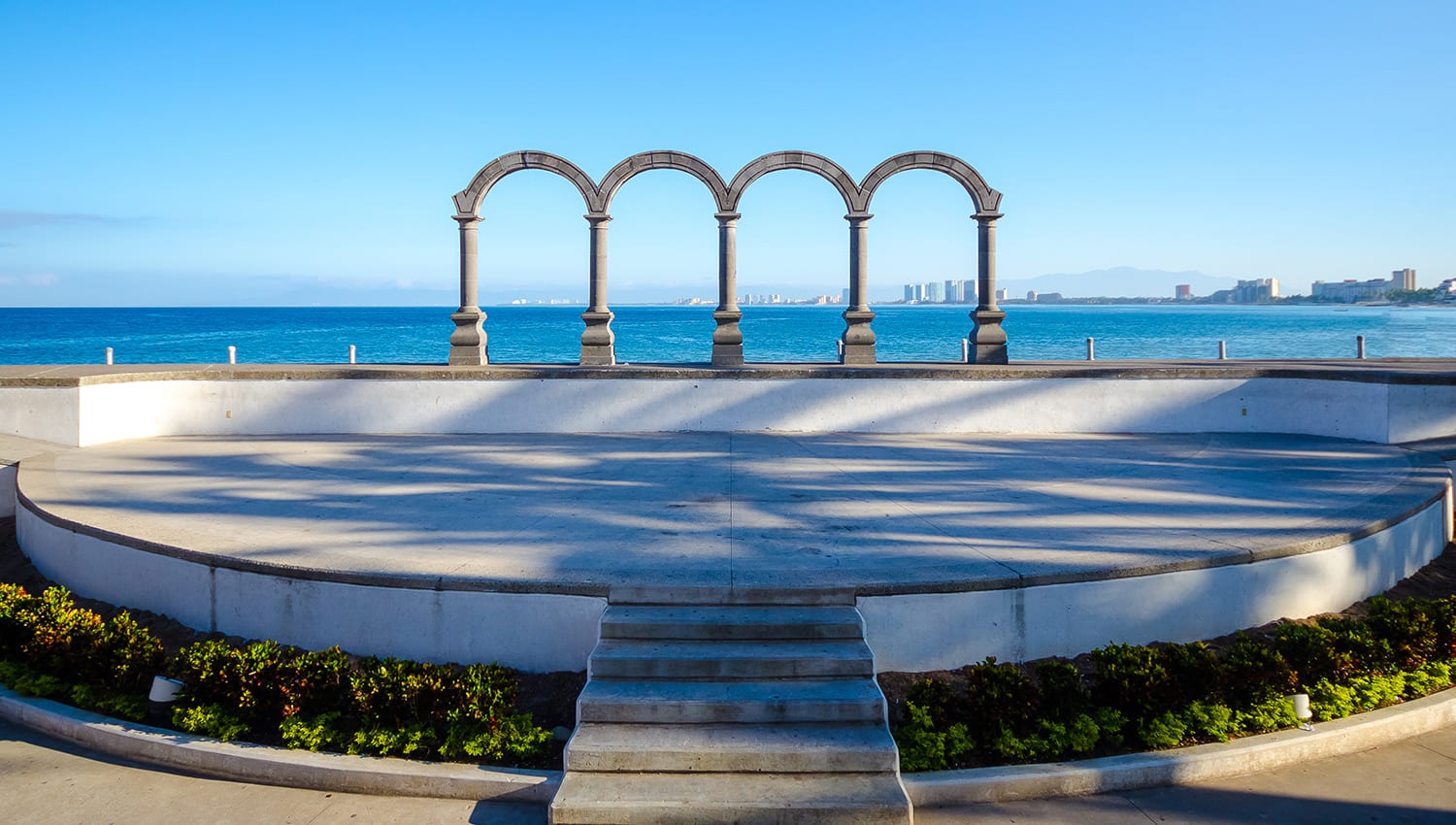
THE MALECÓN ARCHES:
THE PERFECT STAGE FACING THE PACIFIC
Although not a bronze sculpture, Los Arcos del Malecón (The Malecón Arches) deserve a spot on this list for being one of the most photographed locations in Puerto Vallarta. Built from quarry stone, these arches have become the backdrop for countless cultural shows, concerts, and open-air performances. In addition to functioning as an open amphitheater facing the bay, they offer one of the best views to take in the sunset. When the sky lights up in golden and orange tones, the contrast between the architecture, the ocean, and the mountains creates a postcard moment that sums up the destination’s charm and explains why this corner appears in thousands of photos shared every year.