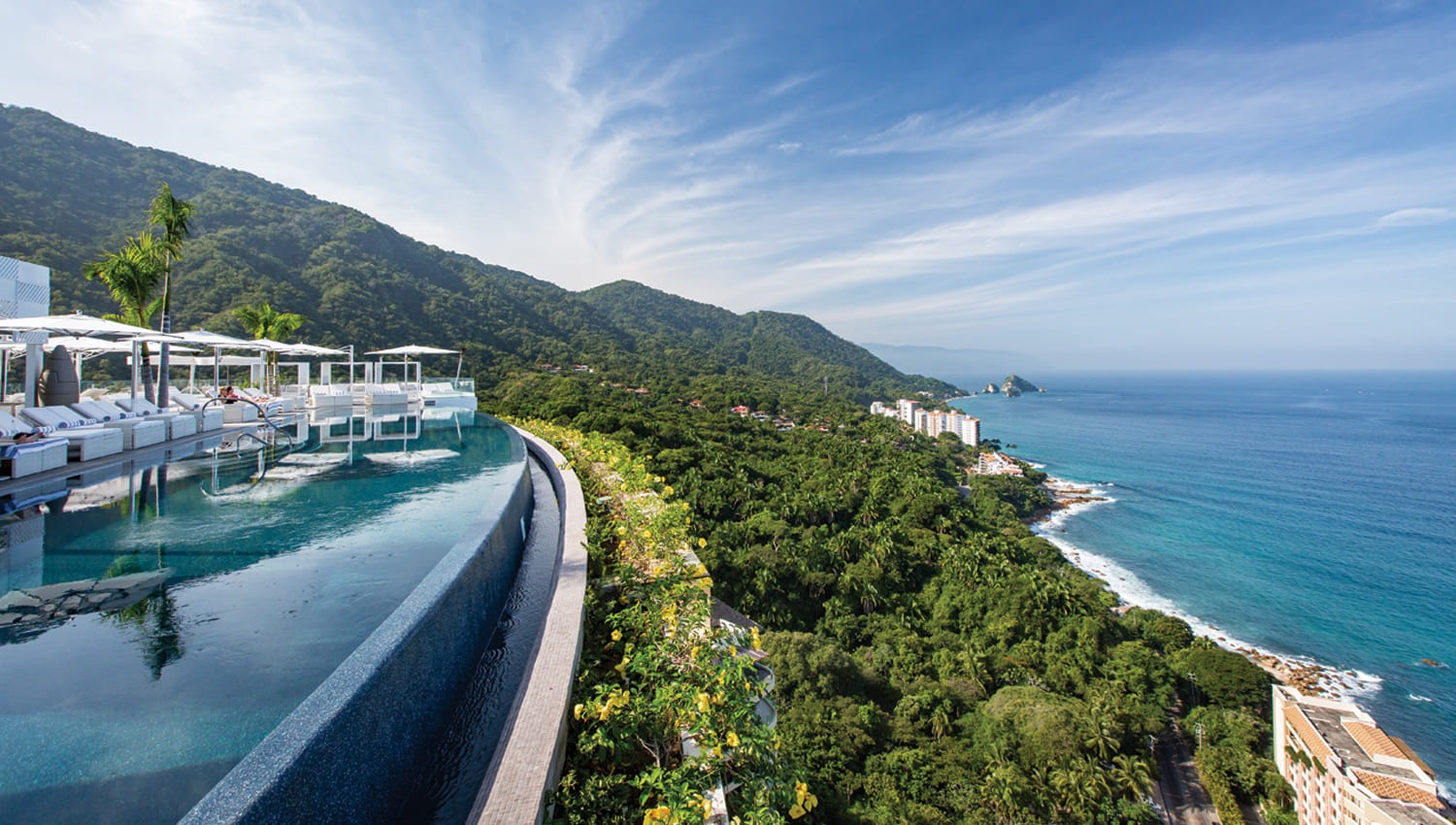
In a region as privileged as Vallarta · Nayarit, it is easy to associate natural beauty with its golden sand beaches, spectacular sunsets, or lush tropical landscapes. However, some of the most captivating scenery can often be found in those details that, because they are part of daily life, frequently go unnoticed.
One of these is the singular meeting between the Sierra Madre Occidental and the Pacific Ocean. Along this coast, the mountain does not merely accompany the landscape from a distance; at numerous points, it descends with determination until it merges directly with the sea, creating a geographical composition that distinguishes this region from many other coastal destinations in Mexico.
At first glance, the scene may seem simple: a hillside falling toward the ocean, outlined by the vegetation covering its slopes. However, one only needs to pause for a few moments to discover the visual richness it contains. The irregular shapes of the terrain, the textures of the rock, and the shifting nuances of the vegetation construct an image in constant transformation, molded by the light, the seasons, and weather conditions.
During the months leading up to the rainy season, for example, the landscape adopts ochre, golden, and brown hues. Although some might associate these colors with a dormant nature, they actually offer a different perspective of the surroundings. The dry vegetation reveals contours that remain hidden during the time of peak greenery, allowing for a clearer appreciation of the mountain’s structure and the way it dialogues with the sea.
It is precisely this capacity for transformation that makes nature an inexhaustible source of wonder. It is not always necessary to undertake an expedition to remote locations to discover memorable landscapes. Sometimes, it is enough to carefully observe that which is part of our everyday path and contemplate it from a new perspective.